

How Does Teeth Whitening Work? What Fundamental Dental Patients Should Know
November 1, 2026If your teeth look more yellow or dull than they used to, you may wonder, How does teeth whitening work? Whitening uses peroxide-based ingredients to break down colored compounds in natural tooth structure, making stains less noticeable. Before beginning teeth whitening in Dallas, it is important to rule out dental problems that may affect treatment. Your dentist can check for decay, cracks, irritated gums, exposed roots, and unexplained tooth pain. These may include decay, cracks, gum irritation, exposed roots, or tooth pain.
What Types of Tooth Stains Can Teeth Whitening Treat?
Whitening works best on discoloration within natural enamel and dentin. Coffee, tea, wine, and tobacco can leave external stains. Age-related yellowing may also respond because bleaching agents can reach color changes below the enamel surface.
Not every dark area is a whitening issue. A single tooth that changes color may have a history of trauma, decay, or changes inside the pulp and should be examined first.
Crowns, veneers, bonding, and tooth-colored fillings do not lighten with whitening gel.
What Should Patients Expect During a Teeth Whitening Treatment?
A professional whitening visit starts with an assessment of your teeth and gums. Your dentist may review sensitivity, existing restorations, recent dental work, and your cosmetic goals.
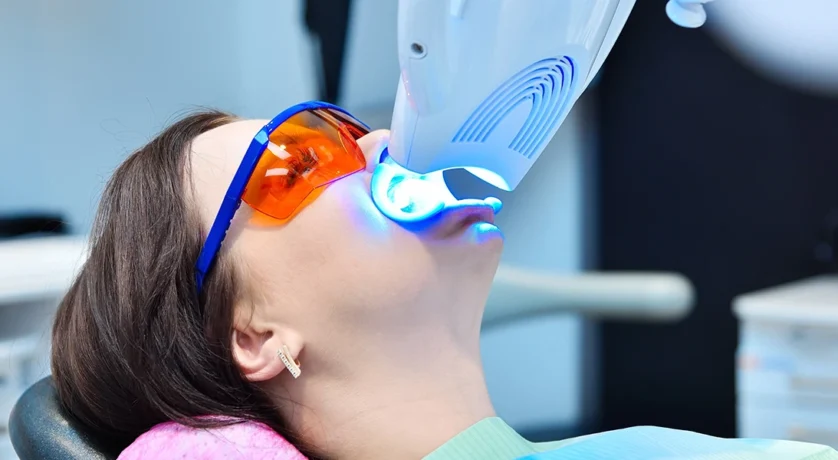
During in-office whitening, the team protects your lips and gums before applying bleaching gel. The product stays on the teeth for controlled periods while the dental team monitors comfort.
Treatment should be individualized. Someone with a history of sensitivity may need a different concentration, shorter exposure time, or another approach.
Is Teeth Whitening Safe for Your Teeth and Enamel?
For appropriately selected patients, whitening is generally well tolerated when products are used as directed. The American Dental Association notes that hydrogen peroxide and carbamide peroxide are commonly used whitening agents and that temporary tooth sensitivity and gum irritation are among the most common side effects.
A dental evaluation matters because you shouldn’t use whitening to mask pain or an untreated problem. If a tooth hurts when you bite, aches without a clear trigger, or develops a new dark area, have a dentist check the cause first.
A cosmetic dentist near me should assess your teeth, existing restorations, and sensitivity before discussing whitening options.
How Long Do Teeth Whitening Results Typically Last?
Whitening is not permanent. Teeth continue to encounter foods, drinks, tobacco, and normal age-related color changes, so the brighter shade may gradually fade.
Coffee, tea, tobacco, oral hygiene, and stain type can influence how quickly discoloration returns. Before repeating treatment, ask whether a touch-up or professional cleaning would be more suitable.
How Can You Maintain a Brighter Smile After Whitening?
Brush twice daily with fluoride toothpaste, clean between the teeth each day, and keep regular professional cleaning appointments. Rinsing with water after dark drinks may also help limit staining.
Avoid aggressive brushing or highly abrasive products to keep teeth white. If discoloration affects only one tooth, a dentist in Dallas, TX can check for causes such as trauma, decay, or changes inside the tooth.
FAQ
Conclusion
Whitening can brighten many natural tooth stains, but the right approach depends on the cause of discoloration, sensitivity, dental history, and existing restorations. An examination helps set realistic expectations and identify problems before bleaching.
At Fundamental Dental, patients can have their tooth color, oral health, and cosmetic goals evaluated before deciding whether professional whitening is appropriate. Schedule a consultation to discuss an approach tailored to your smile.